

Clinical Research & National Survey Reveal Back Pain Is Breaking Australians Mentally, Physically & Financially

Back pain adds to the mental load of 49.7% of Australian back pain sufferers.
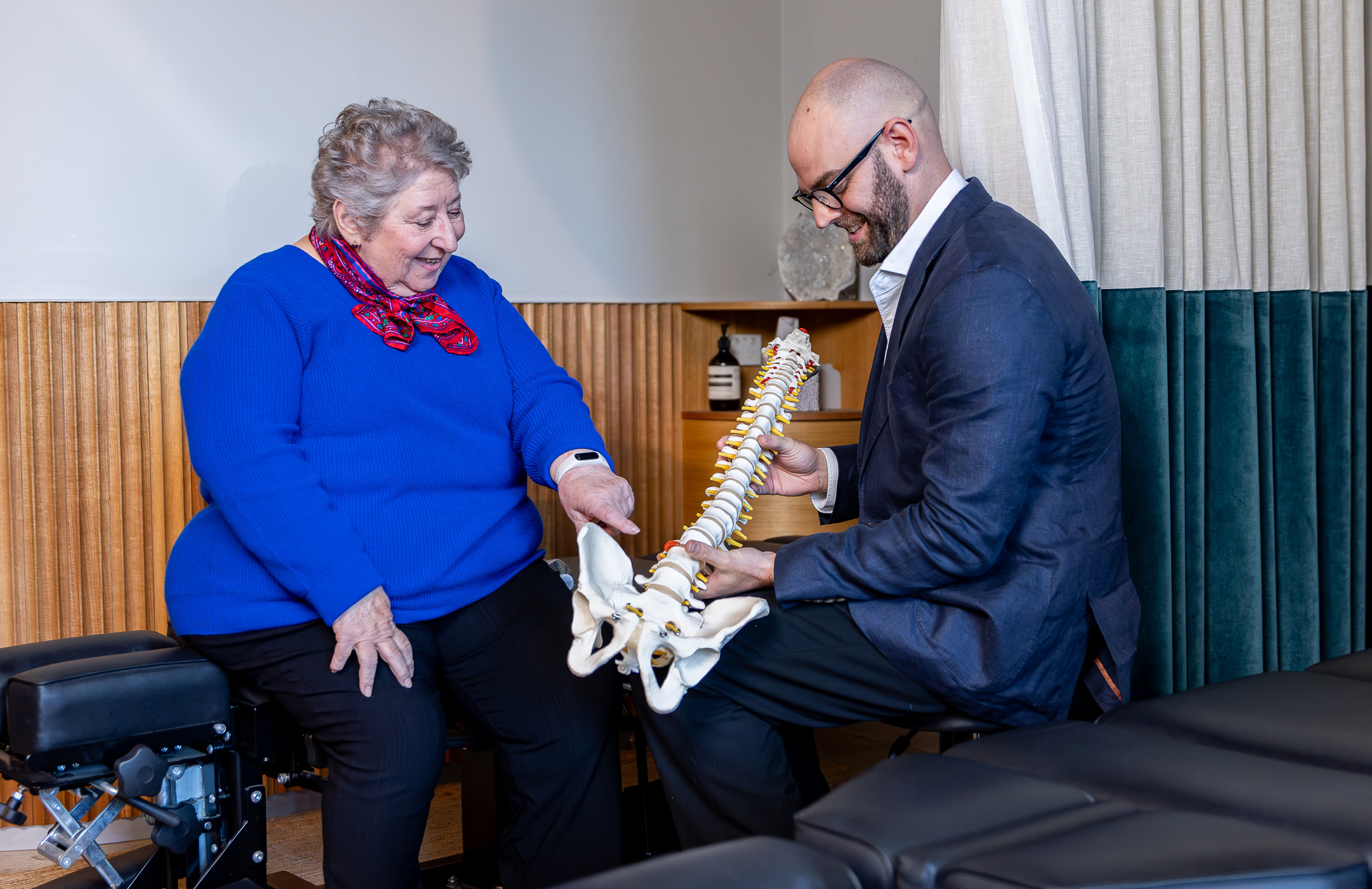
Dr David McNaughton and patient Barbara Holmes - 64.8% of seniors experience mental fatigue from back pain.

Spinal Health Month - A Healthy Spine Supports A Healthy Spine
New research for Spinal Health Month shows back pain is taking a mental, physical & financial toll on Australians, impacting wellbeing, work & access to care.
ACA President Dr Billy Chow said, “The coexistence of back pain and mental health conditions is associated with impaired quality of life, while the increased risk of developing chronic musculoskeletal disorders (MSDs) poses a significant financial burden on sufferers particularly as the cost-of-living bites.
“While chronic back pain can lead to developing psychological and social problems, depressive symptoms can worsen back pain and increase the disability associated with the condition, which can exacerbate back pain’s negative impact on mental health,” Dr Chow said.
In launching Spinal Health Month, ACA released findings on Australia’s first clinical research study that explored the feasibility and acceptability of adding an online, psychologically informed pain management program to the usual healthcare provided by chiropractic musculoskeletal clinicians.
The clinical research study, funded by an ACA Research Grant, was conducted out of CQUniversity in conjunction with Macquarie University’s MindSpot digital psychological care program by Dr David McNaughton (PhD Psychology), a chiropractor, clinician, academic, Senior Lecturer at CQUniversity.
The study, “Adding an online psychologically informed pain management program to routine musculoskeletal care in Australia: A feasibility study,” examined how the mind and body communicate when integrating therapies for psychology and physical health.
Dr McNaughton said, “The results are encouraging showing that in applying the biopsychosocial model focused on the relationship between spinal health, chronic pain and the psychological impact pain has on a person’s mental health, we can help mitigate the impact MSDs have on both physical and mental health.”
Underpinning the significance of Dr McNaughton’s findings, today, the ACA also released new data from an independent national survey by global research company Pureprofile, Back Pain In Australia: The Impact on Mental, Physical & Financial Health, demonstrating a concerning increase in back pain, the mental health consequences and how cost-of-living is preventing patients from seeking medical treatment.
The survey found 87.1% of Australian adult respondents (n=1,040) experienced back pain within the past year, with 69% reporting mental health impacts and 45.9% stating a moderate to extreme impact.
In the past two years, chronic pain has surged 22% with the proportion of back pain sufferers with chronic pain (lasting more than three months) increasing from 30% (2024) to 44.1% (2026).
The rising cost-of-living continues to heavily impact households, driving widespread cost-cutting including for healthcare. 44% of back pain sufferers reported the cost-of-living has prevented them from seeking treatment from a healthcare professional with GP visits down 14%, physiotherapy down 23%, and chiropractic down 19% since 2024; while the use of over-the-counter (OTC) pain medications to treat their pain has risen.
85% of sufferers reported using OTC pain medication for back pain; up from 81% in 2024, while 61% reported using prescription medication. 49% never sought a medical diagnosis for their back pain.
1 in 10 low back pain sufferers reported taking OTCs daily despite established clinical evidence by the University of Sydney finding paracetamol is no more effective than placebo for low back pain, with the WHO guidelines (2023) recommending medication only as an adjunct to active treatment, not as a primary or long-term intervention.
This past year, 52% reported their back pain added to their mental load; with women more likely to experience mental health consequences. Women were 28% more likely than men to avoid treatment due to cost.
6.1 million Australians are already affected by MSDs, of which 58% are of working age in peak-income-earning years (25-64 years) costing the Australian economy annually $55.1 billion in direct health costs, lost productivity and reduced quality of life (Deloitte).
The survey found 28.5% (almost one-third) of peak-working-age Australians who suffer low back pain required time off work or were no longer able to work due to back pain.
Dr McNaughton said, “With MSD cases including back pain projected to increase by 43% over the next two decades, research that supports psychologically informed pain management in addition to clinical musculoskeletal healthcare is vital in minimising the overall burden of MSDs on Australians’ health and wellbeing and the economy”.
Dr McNaughton’s study is the first to assess the integration of clinical treatment of MSDs and online psychological pain management programs to minimise the physical and emotional impact chronic musculoskeletal pain has on the overall health and wellbeing of sufferers.
“By integrating clinical chiropractic treatments with psychologically informed pain management in a biopsychosocial model, we can help minimise the overarching impact MSD pain (including back pain) has on sufferers,” Dr McNaughton said.
The study recruited 26 musculoskeletal clinicians (including 19 chiropractors) to evaluate attitudes and perspectives on the psychologically informed pain management program and to invite patients undergoing musculoskeletal healthcare to participate in an online pain management program.
In addition to traditional musculoskeletal treatment, the MindSpot Pain Course, a well-established, data-driven psychologically informed pain management program offering strong data validation in pain-related disability, anxiety, and depression for thousands of participants, was selected as the online mental health service.
Patients who completed the MindSpot Pain Course consistently reported positive experiences around course process, course experiences and found the program beneficial, acceptable and useful in helping to manage their chronic musculoskeletal pain and psychological symptoms in conjunction with chiropractic treatment.
“The results of the study are promising with all psychological and musculoskeletal pain-related outcomes of patients appearing to improve across all participants, with patients reporting that the referral by their trusted clinician was critical to their participation and completion of the MindSpot Pain Course, particularly among patients who had not been previously exposed to psychological therapy,” said Dr McNaughton.
To minimise the long-term implications of MSDs, including back pain, sufferers should seek drug-free, chiropractic healthcare to treat the cause, not just the symptoms to reduce the risk of chronic pain and mitigate negative secondary implications including the impact chronic pain has on mental health and overall wellbeing.
www.spinalhealth.org.au
Visit Media Centre images/journalist notes
Alice Collins
Insight Communications
email us here
Visit us on social media:
LinkedIn
Facebook
YouTube
Spinal Health Month 2026
Legal Disclaimer:
EIN Presswire provides this news content "as is" without warranty of any kind. We do not accept any responsibility or liability for the accuracy, content, images, videos, licenses, completeness, legality, or reliability of the information contained in this article. If you have any complaints or copyright issues related to this article, kindly contact the author above.
